Explainer · the life of a phone call
Inner Signal: the life of a phone call
A woman in Warminster rings her son’s mobile from her own phone. He is hiking in the Highlands, miles from the nearest mast. We shrink down and ride the call, from the moment she presses call to the line on her bill.
Written by a mobile network insider with over 13 years in GSMGSM Global System for Mobile communications: the 2G standard from 1991 that started it all, and the base that SMS, roaming and SIM cards were built on. Glossary, from IVR and SMS to call routing and thin and thick MVNOsMVNO Mobile virtual network operator: a brand that sells mobile service over someone else’s network. A thin MVNO mostly resells; a thick MVNO runs its own core network, SIMs and billing. Glossary.
An honest note. As of November 2026, the only live UK satellite-to-phone service is Virgin Media O2’s O2 Satellite service, over Starlink Direct to CellDirect to cell Starlink’s name (and the industry’s shorthand, D2C) for satellites that act as a mobile mast in space and connect to normal 4G phones through a partner network. Glossary. It offers texts, location sharing and a short list of apps, including WhatsApp. WhatsApp calls can work, but they are internet (VoIP) calls over the app’s data, not a normal phone call, so quality varies and they can drop as satellites pass. Standard phone calls, including 999, are not supported yet. This story’s satellite voice leg is the near future being built, not something you can dial today.
Meet the cast
Scroll the strip, or jump into a chapter when you are ready.
 The Call PodOur shrunken craft
 Her IMSIThe caller’s secret agent
 His IMSIThe receiver’s secret agent
 TMSIThe disguise
 KiThe key that never leaves
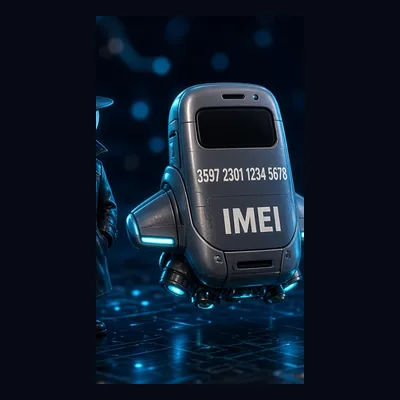 IMEIThe ship
 Lighthouse keeperThe mast
 SignalmanHer exchange
 BouncerThe credit check
 Passport officerThe front door
 ArchivistThe master register
 ReceptionistThe visitor register
 Vault guardianThe twin key’s vault
 Satellite lighthouseA mast in space
 Sniffer dogBorder control
 AccountantsThe afterlife
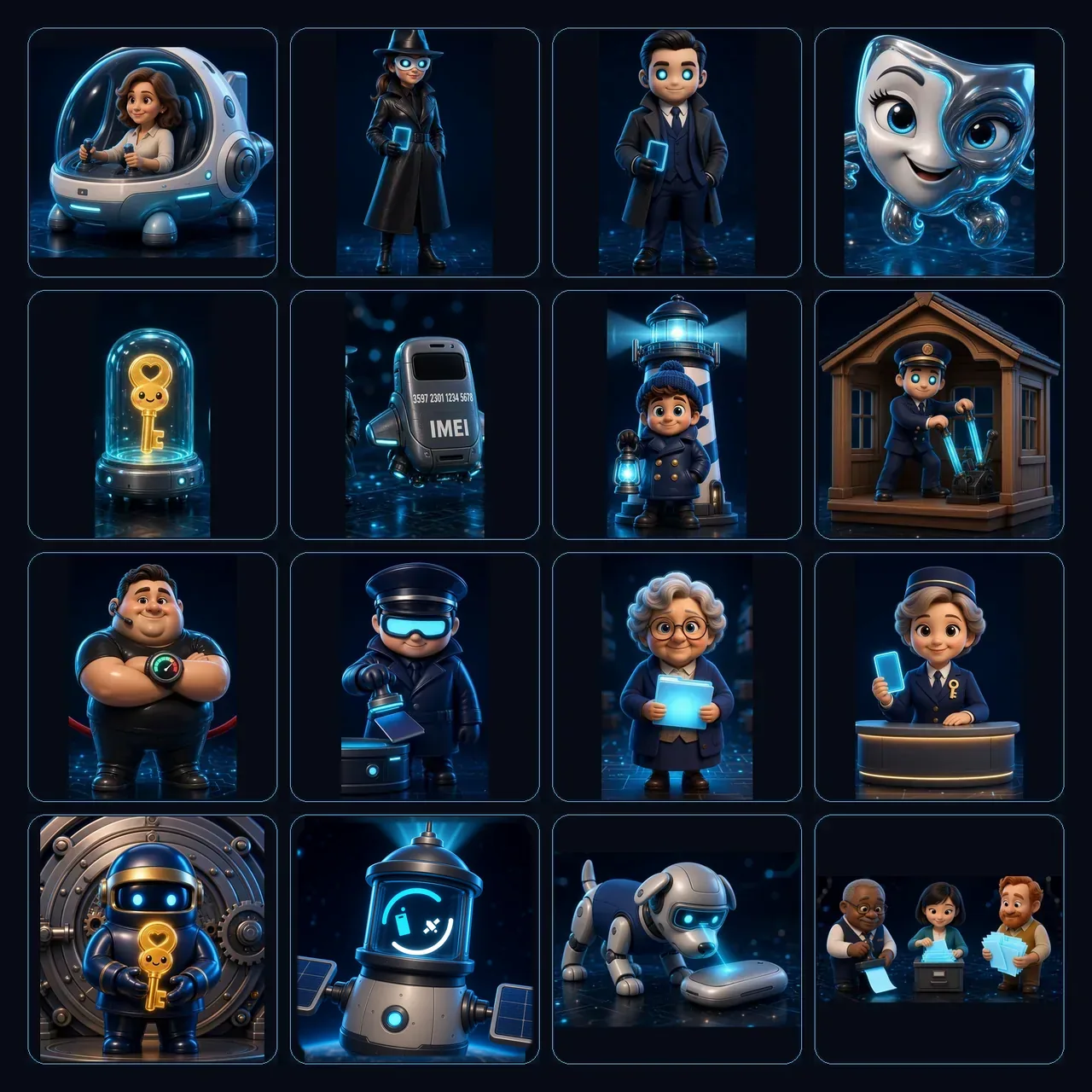
Our shrunken craft
The Call Pod
It carries her voice from the moment she presses call to the line on her bill.
The caller’s secret agent
Her IMSI
Lives in her SIM and in her network’s register. Over the air she wears a TMSI disguise, which the network swaps regularly so nobody can follow her.
The receiver’s secret agent
His IMSI
Lives in his SIM. The two agents meet in the middle when the call connects.
The disguise
TMSI
A temporary mask, handed out by the visitor register and changed often. The real agent almost never shows their face over the air.
The key that never leaves
Ki
A glowing secret key locked inside the SIM, with a twin locked in the network’s AuC vault. They are never in the same room, which is exactly why the trick works.
The ship
IMEI
The handset itself, with a unique 15-digit hull number stamped on it. Border control (the EIR) checks it against the stolen-phone list.
The mast
BTS lighthouse keeper
He takes the radio call in from her phone and sends it into her network.
Her exchange
MSC signalman
He sets the call up on her network and hands it to the other operator.
The credit check
Charging bouncer
Because she is placing the call, he asks her network whether she can pay, before the Call Pod is allowed out.
The front door
Gateway MSC passport officer
He meets calls arriving from other operators and asks the archive where the person being rung actually is.
The master register
HLR archivist
She turns a phone number (the MSISDN, the public name) into the secret agent behind it.
The visitor register
VLR receptionist
She issues a room key (the MSRN) that works for this one call, then is useless.
The twin key’s vault
AuC vault guardian
He looks after the twin keys and the random challenges that prove an agent is genuine.
A mast in space
Satellite lighthouse
A satellite acting as a mobile cell, already covering the glen.
Border control
EIR sniffer dog
He checks the ship’s hull number against the stolen-phone list.
The afterlife
Billing accountants
They clean the receipts from both networks, put a price on them and print the bill.
Every number in this story is made up. Phone numbers, IMSI and IMEIIMEI Your phone’s unique serial number (dial *#06# to see it). Networks use it to check which features a handset supports. Our checker never asks for it. Glossary values are examples, and 07700 900xxx is a range set aside for drama. Names and message formats are the real ones.
Chapter 1 of 14 · Her network
She presses call

In a kitchen in Warminster, she types her son’s mobile number and presses call. We shrink down and climb aboard the Call Pod. Her phone is already on a normal UK mast, so the first hop is a short radio hop: the number, and a request to place the call, go up to the lighthouse on the hill.
 Call Pod
Radio · call setup
Phone  →  mast (BTS / eNodeB)   radio signalling
   GSM-style:  CM Service Request  (MO call), then  SETUP
              with calledPartyBCDNumber = 07700 900123
   Today’s VoLTE:  SIP  INVITE  to her IMS core (via the P-CSCF)
              Request-URI / To: +447700900123
07700 900000 to 900999 is Ofcom’s reserved drama range- On a mobile she does not send each digit as a musical tone, the way a landline does. The whole number travels in the setup message once she presses call.
- 07700 900000 to 07700 900999 is the mobile range Ofcom sets aside for TV and drama, so no real person will ever answer it.
Chapter 2 of 14 · Her network
Up the mast
The mast is a base station: a BTS in the old language, an eNodeBeNodeB The 3GPP name for a 4G base station (the 5G one is a gNodeB): the radio kit at the top of a mast. A direct-to-cell satellite does this job from space. Glossary or gNodeB on a 4G or 5G network. Our lighthouse keeper takes the Call Pod in from the air and sends it down a cable, into her operator’s core. From here the call is a visitor in a very large, very tidy machine.
 BTS lighthouse keeper
 MSC signalman
Um / Uu · terrestrial radio
Phone  ↔  BTS/eNodeB     Um (2G) or Uu (4G/5G) radio link, encrypted once ciphering is on
BTS/eNodeB  →  BSC/RNC or directly to the core     backhaul (fibre, or microwave)
Core → MSC (classic) or IMS S-CSCF / TAS (VoLTE)- The mast does not decide whether she may place the call. It is a radio doorway. The decisions happen further in.
Chapter 3 of 14 · Her network
“Prove you’re you”

The network must be sure her secret agent is genuine, without ever asking for the secret itself. In a live network this check usually ran when her phone last signed on, and it can run again when she starts a call. We show it here so you can see it happen. The network sends a random number, the RAND. Inside her SIM, the glowing key (Ki) scrambles it into an answer (SRES). In the network’s AuC vault, the twin key has already worked out the right answer. If they match, the agent is real. Both sides also make a one-off ciphering key, and her conversation is scrambled from here on. Ki itself never leaves either vault. Over the air she wears her TMSI disguise, not her real name.
 Her IMSI
 TMSI mask
 Ki
 AuC vault guardian
GSM security · DTAP (or AKA in 4G/5G)
AuC (in advance)  RAND → A3(Ki) = SRES,  A8(Ki) = Kc   →  triplet to her VLR
VLR → phone   Authentication Request   RAND (128 bit)
Her SIM        SRES′ = A3(Ki, RAND);   Kc = A8(Ki, RAND)
phone → VLR    Authentication Response   SRES′
VLR SRES′ = SRES ? yes → Cipher Mode Command- An eSIMeSIM A SIM built into the phone that you download instead of inserting. Handy for adding a second line, such as a satellite plan, without swapping cards. Glossary is only a downloadable profile. It still holds the IMSI and the Ki, so the same authentication applies whether the profile arrived on a plastic SIM or over the air.
- Newer networks (3G, 4G, 5G) also make the network prove itself to the phone. Original GSM only checked the phone.
- The TMSI is a temporary mask, handed out by the VLR and changed regularly, so one hidden number cannot be followed from place to place.
Chapter 4 of 14 · Her network
The bouncer at the door
She is the one placing the call, so she is the one who pays. Before the call is allowed out of her network, the charging system is asked: is this call allowed, and is there credit? The question travels over CAMEL, a rulebook that lets a prepaid platform step into any call. Credit is fine, so the bouncer waves the Call Pod through. If she had been out of credit, the journey would have ended here, with a short recorded message instead of a ring.
 Charging bouncer
- Her IMSI
CAMEL · CAP (or online charging over Diameter)
Originating MSC → SCP   CAP  InitialDP
   serviceKey, callingPartyNumber, calledPartyNumber (07700 900123),
   imsi (hers), eventTypeBCSM = collectedInfo
SCP → charging   balance and rate check  (a UK-to-UK mobile call, plus any satellite surcharge)
SCP → MSC CAP Continue (or ReleaseCall to refuse, ApplyCharging to set a time limit)- This is why the credit check sits on her side. In the UK the caller usually pays. Receiving a call on your home network is typically free, though there are exceptions, for example if you are roamingRoaming Using another network when yours isn’t there, usually abroad. Satellite-to-phone works much like roaming: your phone attaches to a partner network that happens to be in space. Glossary abroad and someone rings you.
- On a 4G or 5G network the same job is done by online charging over Diameter, talking to a CHF or OCS. The bouncer is the same, the doorway is newer.
- SCP stands for Service Control Point, the “brain” that runs prepaid rules. This is where a lot of real operator money is made and lost.
Chapter 5 of 14 · The join
Across the interconnect
Her signalman sees a number that belongs to another operator (people can switch network and keep their number, so he has to check). He hands the Call Pod over at the interconnect, the official join between the two companies. Waiting at the far door is the passport officer: his network’s Gateway MSC, which takes calls arriving from the outside world. The message that does the handing over is called an IAM.
- MSC signalman
 Gateway MSC passport officer
- Call Pod
SS7 · ISUP (or SIP at the interconnect)
Her MSC/GMSC  →  his Gateway MSC    ISUP  IAM  (Initial Address Message)
   Called party number  : +44 7700 900123
   Calling party number : her mobile (presentation allowed)
   Transmission medium  : speech
sent at a Point of Interconnect- On today’s UK networks this would usually be a 4G or 5G voice call (VoLTE), handled by an IMS core rather than a classic MSC. The jobs are the same: check who you are, check you can pay, and hand the call to the other operator. We keep the older names here because they make the roles easier to follow.
- ISUP is the call-setup language of the old telephone network. It runs over SS7 signalling links, and today often over IP as SIP-I or native SIP.
Chapter 6 of 14 · His network
“Where is he?”
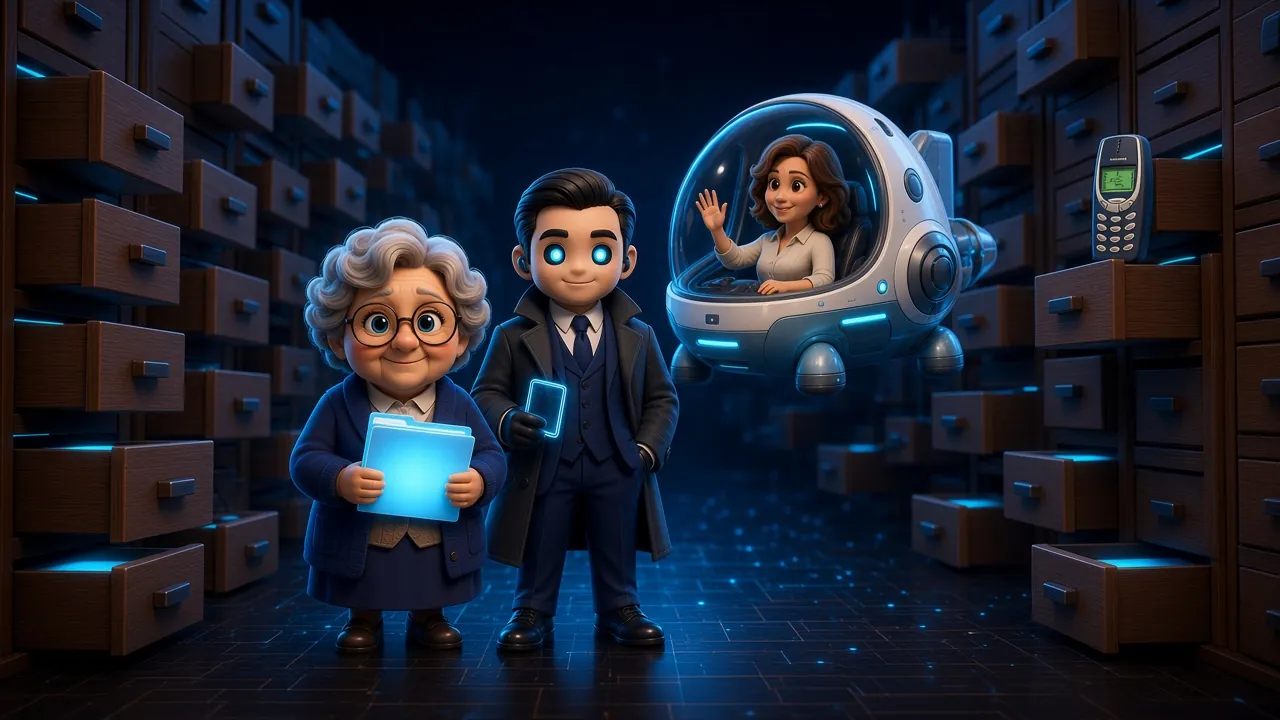
The Gateway MSC has a phone number but no idea where the phone is. It asks the HLR, the network’s master register of subscribers. The archivist takes the public name (the MSISDN, which is simply the phone number) and finds the secret agent behind it: his IMSI, the identity that lives in his SIM. The number everyone knows is not who he really is. His agent steps out of the archive and joins the story.
 HLR archivist
 His IMSI
- Call Pod
SS7 · MAP
GMSC → HLR   MAP  SendRoutingInfo
   msisdn            : 447700900123
   interrogationType : basicCall
HLR: look up MSISDN → IMSI  001 01 0123456789  (illustrative, ITU test range)
HLR: known? barred? diverts set? which VLR is he registered in?- In 4G and 5G the HLR’s job is done by the HSS and UDM. Same idea: a very large database that says who you are and where you are.
- IMSI is 15 digits: a country code (234 for the UK), a network code, then a personal number. The IMSI in these examples is from the ITU test range, not a real customer.
Chapter 7 of 14 · His network
A room key for one call
The archivist knows which area his phone last reported in, but that is not a number you can ring. So she asks the visitor register there (the VLR) for a temporary routing number made for this one call, the MSRN. The receptionist cuts a hotel room key that works once, then is useless. The HLR passes it back, and the Gateway MSC sends the Call Pod on towards it.
 VLR receptionist
- His IMSI
SS7 · MAP
HLR → VLR   MAP  ProvideRoamingNumber
   imsi, msc-Number, msisdn
VLR → HLR   result: roamingNumber (MSRN)   (from the serving MSC’s own number pool)
HLR → GMSC  SendRoutingInfo result: MSRN
GMSC → serving MSC ISUP IAM to the MSRN- The VLR is the network’s short-term memory of who is currently in its area. It also holds the TMSI mask that goes with each IMSI.
- If he had set “divert all calls”, the HLR would have returned the diversion number instead of an MSRN.
Chapter 8 of 14 · Space
The twist: there is no mast

Here is the clever bit. Her son is in a glen with no ordinary mobile signal, but a satellite overhead is acting as a mobile mast in space: our orbiting lighthouse. The Call Pod rides a beam from a ground stationGround station A dish site on Earth that links satellites to the internet and to the mobile network’s core. With a bent-pipe satellite, your call or message comes down here before it goes anywhere else. Glossary (the gateway) up to the satellite, which relays it down to his phone on ordinary mobile frequencies. His phone treats it as an ordinary cell.
An honest note. As of November 2026, the only live UK satellite-to-phone service is Virgin Media O2’s O2 Satellite service, over Starlink Direct to Cell: texts, location sharing and a short list of apps, including WhatsApp. WhatsApp calls can work, but they are internet (VoIP) calls over the app’s data, not a normal phone call, so quality varies and they can drop as satellites pass. Standard phone calls, including 999, are not supported yet. VodafoneThree has said its planned AST SpaceMobile service is expected to include voice, with beta testing expected in early 2027. This leg of the story shows that near future, not a native voice call you can place over satellite today.
 Satellite lighthouse
- Call Pod
Satellite radio
Mobile core  ↔  Ground gateway      fibre
Ground gateway  ↔  Satellite         FEEDER LINK: radio link between satellite and ground
Satellite ↔ His phone SERVICE LINK: mobile-band spectrum, standard handset- Some designs put the base station inside the satellite. Others keep it on the ground and use the satellite as a relay. Direct-to-cell services such as Starlink’s are built so an ordinary phone can treat the satellite as a normal cell. 3GPP3GPP The body that writes the global mobile standards (GSM, 3G, 4G LTE, 5G). Its Release 17 added satellite (NTN) support to the standards in 2022. Glossary’s NTNNTN Non-terrestrial network: the official 3GPP term for mobile networks that use satellites (or high-altitude platforms) instead of, or as well as, masts on the ground. Glossary standards (Release 17 onwards) also give the phone extra help with long delay and Doppler shift.
- Real satellite-to-phone systems are 4G or 5G based (the 3GPP “NTN” standards), so voice would run as VoLTE rather than through an MSC. We draw the classic path because it is the clearest way to see who does what.
Chapter 9 of 14 · Space
Shouting his disguise across the glen
Now the network has to find him. It calls out his temporary disguise, the TMSI, across the whole satellite beam, which is far bigger than a normal mobile cell. A disguise matters: shouting his real identity over a wide area would let anyone with a radio follow him around. Only one phone in the glen recognises the mask, and it answers.
- TMSI mask
- His IMSI
- Satellite lighthouse
BSSMAP · radio paging
MSC/VLR → radio network   BSSMAP  PAGING  (tmsi 0xA1B2C3D4, location area)
Radio network → air          Paging Request on the paging channel, every cell in the area
Phone → network Channel Request, then Paging Response (TMSI)- Paging a big beam costs a lot of radio capacity, which is one reason satellite networks are careful about how often they do it.
Chapter 10 of 14 · Space
“Prove you’re you,” again
His network now runs the same check she passed, with his own agent and his own key. A new random challenge goes out. Inside his SIM, his Ki scrambles an answer. The twin in his operator’s AuC vault already knows what the answer should be. They match, a fresh ciphering key is made, and his radio link is locked. Two keys, two vaults, two agents: neither secret has crossed the air.
- His IMSI
- Ki
- AuC vault guardian
GSM security · DTAP
His AuC     RAND → A3(Ki) = SRES,  A8(Ki) = Kc   →  triplet to his VLR
VLR → phone  Authentication Request   RAND
His SIM      SRES′ = A3(Ki, RAND);   Kc = A8(Ki, RAND)
phone → VLR  Authentication Response   SRES′
VLR match → Cipher Mode Command (A5 or the 4G equivalent, key Kc / Kasme)- The two authentications are independent. Her network proved she is she; his network now proves he is he. Neither operator has to trust the other’s key.
Chapter 11 of 14 · His network
Border control for the ship

The agent checks out, but what about the ship he is travelling in? Every phone has a unique 15-digit serial number, the IMEI, stamped on its hull. Many operators then ask the EIR, the border-control register, and the sniffer dog is sent out. The check is optional and depends on the operator’s policy. In this story the hull number is not on the stolen-phone list. Green light: cleared to proceed.
 IMEI
 EIR sniffer dog
SS7 · MAP
MSC → phone   DTAP  Identity Request (IMEI)
phone → MSC   Identity Response   IMEI 35 123456 654321 1   (illustrative)
MSC → EIR     MAP  CheckIMEI (imei)
EIR → MSC equipmentStatus = whiteListed- The first 8 digits say which make and model (the TAC), the next 6 are the serial number, and the last is a check digit.
- When the check is done, the EIR can return white, grey or black list. Stolen phones are often added to a shared industry list, so a phone reported stolen on one UK network can be blocked on others. Not every network checks the IMEI on every call.
Chapter 12 of 14 · The join
Ring ring: the agents meet

Meter 4:12 call connected, charging
His phone buzzes in his pocket. A message called ACM (Address Complete) races all the way back to her network, which plays her the ringing tone. He answers, and a second message, ANM (Answer), tells every exchange along the route that the call is connected. At that moment the meter starts, and the two secret agents meet in the middle: her IMSI and his IMSI, shaking hands over a living call.
Now her voice is on the move. Because both ends are mobiles, it can often stay in the compact mobile format (AMR) the whole way. It only gets transcoded into the old 64 kbit/s telephone format if the join between the two operators still needs it. Up at the satellite, travelling at about 17,000 mph, the network constantly adjusts timing and frequency to cancel the Doppler effect: the same trick that makes an ambulance siren change pitch as it passes.
- Her IMSI
- His IMSI
- Call Pod
ISUP · DTAP
phone → MSC   DTAP  Alerting         →  ISUP  ACM  back to her network  →  ringback tone
phone → MSC   DTAP  Connect          →  ISUP  ANM  →  charging starts
SCP           CAP  EventReportBCSM (oAnswer)  →  her prepaid timer begins
Voice path    AMR end to end where the interconnect allows it;
              otherwise transcoded (AMR ↔ G.711) at a media gateway
Satellite     typical low orbit a few hundred kilometres up, speed about 7.5 km/s (about 17,000 mph);
Doppler and timing advance pre-compensated (3GPP NTN, Release 17 onwards)- No ANM means no billing. Until someone answers, the call is free, which is why a lot of fraud tries to get calls “answered” without a person.
- Standard GSM timing only copes with distances up to about 35 km. Satellite systems need extra timing tricks, which is part of what the NTN standards add.
Chapter 13 of 14 · Back office
Hang-up, and a line on two bills

When she says goodbye and hangs up, a REL (Release) message goes hop by hop along the route, and each exchange answers RLC (Release Complete) once it has let go of the line. Behind the pod the lights go out, one stop at a time. Then the afterlife begins. Both networks write a small receipt, a CDR (call detail record): hers for the call she placed, his for the call he received. The receipts drift to mediation, where they are tidied and merged, then to rating, which puts a price on them, and to billing. The two operators also settle up with each other, because her operator pays his operator a small fee for delivering the call. The grave is a line on her bill.
 Billing accountants
- Her IMSI
- His IMSI
ISUP · CDRs · settlement
She hangs up  →  ISUP  REL  (cause 16: normal call clearing)  hop by hop
Each switch    →  ISUP  RLC  once its circuit is freed
Radio side     →  DTAP  Disconnect, Release, Release Complete;  radio channel freed
SCP            →  CAP  EventReportBCSM (oDisconnect), final charge reported
Her network    MO CDR   (A and B numbers, start and end, duration 252 s, her IMSI, cell)
His network    MT CDR   (same call, his IMSI, IMEI, serving cell / satellite beam)
Mediation      collect, validate, remove duplicates, join records
Rating         252 s × her tariff;   wholesale: mobile termination (and any satellite fee)
Billing        invoice line:   07700 900123    4 min 12s
Settlement originating operator pays the terminating operator, usually netted off- For prepaid there is no monthly bill. The record feeds the charging system that already took the money while she talked.
- Two receipts for one call is normal. Each operator only sees its own half clearly, which is why mediation and wholesale billing exist.
Chapter 14 of 14 · His network
Alternate ending: nobody answers
In another universe he is deep in a peat bog with his phone in his bag, and does not answer. After 20 to 30 seconds of ringing, the network’s no-reply timer runs out and the call is quietly diverted to voicemail. A friendly robot voice (the IVR) asks her to leave a message after the tone. If his phone had been out of reach altogether, the network would have diverted her at once, and she would never have heard a ring.
- Call Pod
- HLR archivist
ISUP · call forwarding
GMSC/MSC   no-reply timer (NRy, typically 20 to 30 s) expires
HLR profile  call forwarding on no reply → voicemail access number
ISUP IAM     redirecting number = his number, redirection reason = no reply  →  voicemail platform
IVR          plays greeting, records message
Voicemail SMS to him: “You have a new voicemail” (MAP MT-ForwardSM)- The “not reachable” case (switched off, no signal at all) is a separate setting and diverts immediately.
- IVR means Interactive Voice Response: any computer that talks to callers and listens to their key presses or voice.
- When voicemail answers, the network treats the call as connected (an ANM is sent). Whether she is charged, and how much, depends on her tariff: some UK tariffs make voicemail free or cheap, others apply a short rate.
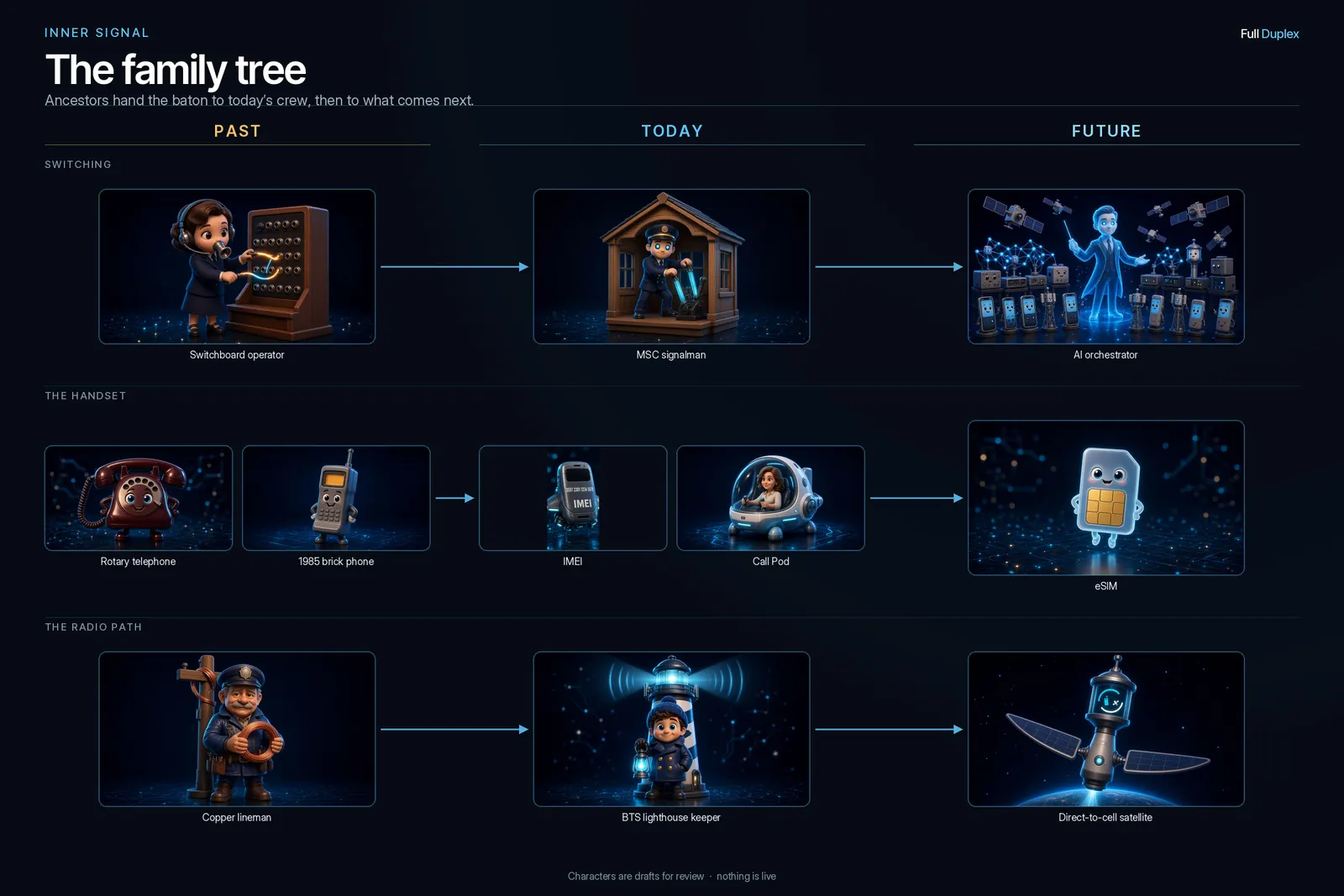
What comes next
Today’s crew still does the work you have just ridden through. These characters are a look at what is arriving, or still expected, around that same journey.
-
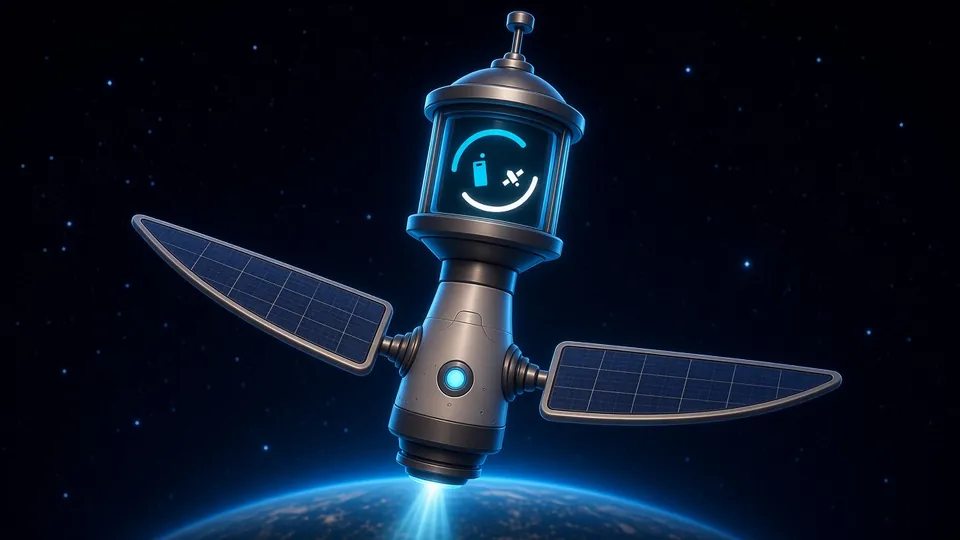
Direct-to-cell satellite In the UK, Virgin Media O2’s O2 Satellite service is already live for texts, location sharing and some apps, over Starlink Direct to Cell. A native voice call to an ordinary phone, of the kind this story rides, is the next step being built, using 3GPP Non-Terrestrial Networks from Release 17 onwards.
-
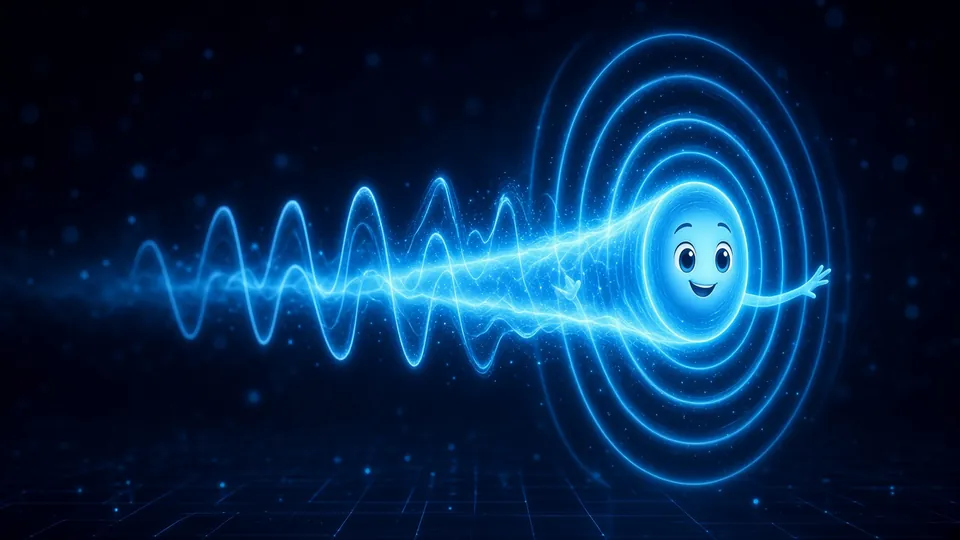
Orbital beam Those NTN standards give the radio extra help with long delay and Doppler shift, so a phone in a glen can treat a fast-moving satellite as a cell. Later 3GPP releases add further enhancements.
-
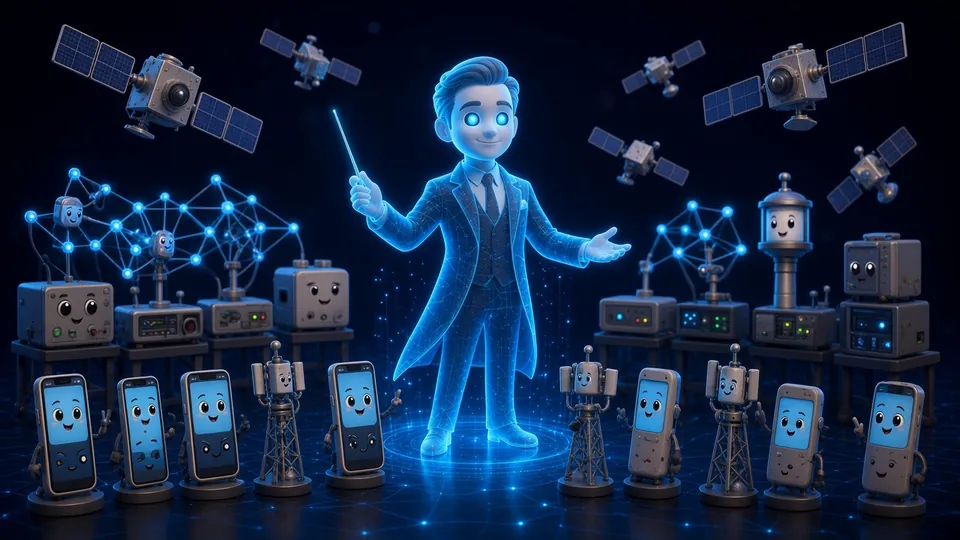
AI orchestrator AI-driven networks are being trialled and are emerging. They are not deployed everywhere, and this character stands for that work in progress, not a system you will find in every core today.
-
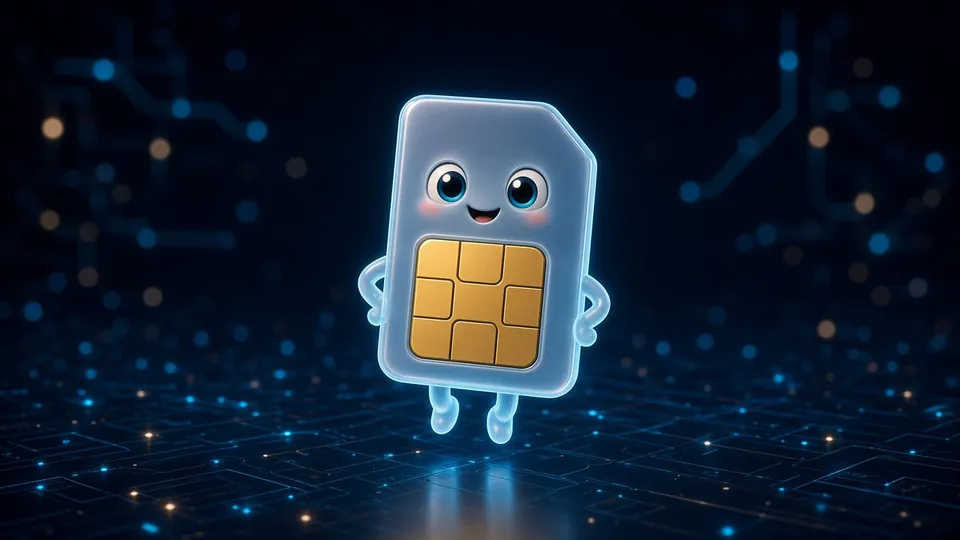
eSIM An eSIM is a downloadable profile. It still holds the IMSI and the Ki, so the same authentication you met in this story applies, whether the profile arrived on a plastic SIM or over the air.
-

NTN core 3GPP’s Non-Terrestrial Networks work, from Release 17 onwards, is how ordinary phones and satellites are being standardised to talk to each other. 6G is expected around 2030, as 3GPP studies the groundwork in Releases 20 and 21. That date is an expectation, not a fact.
-
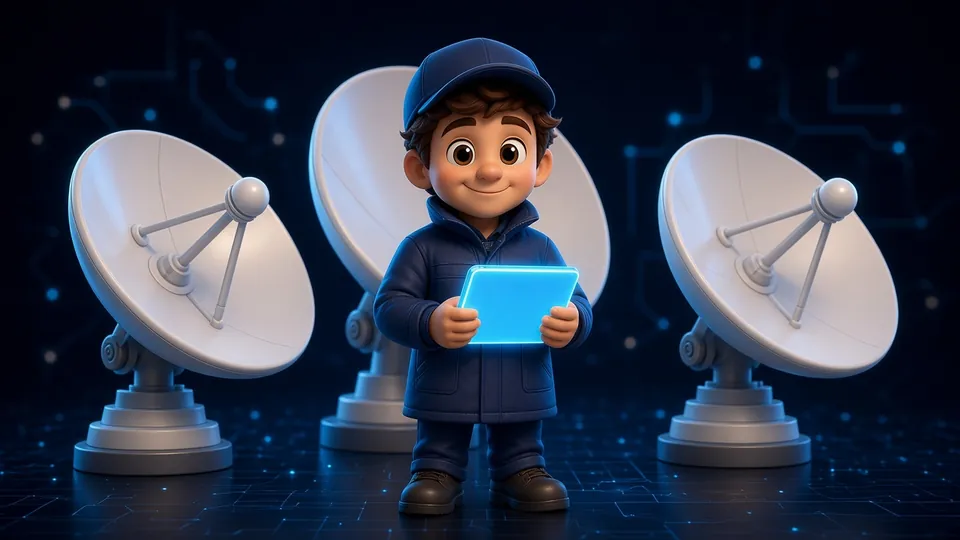
Gateway station Many designs still bring the call down through a ground station before it reaches the core. The keeper is expected to remain part of the path, even as more of the radio moves into orbit.
The whole trip in one breath
One tap on a mobile, two networks, two secret agents who meet in the middle, a satellite moving at 17,000 mph, and a pair of billing systems that would not give up. It all took a few seconds to connect and left a single line on her bill: 07700 900123, 4 min 12s.
Standard voice calls from an ordinary UK phone, over a satellite, are not here yet. Virgin Media O2’s O2 Satellite service is live for texts, some apps, and WhatsApp calls over the app’s data. Other operators have native voice in their plans. Signal is where we follow what comes next.
Where the details come from
- Call setup and routing: ITU-T Q.763 (ISUP message formats) and Q.764 (ISUP procedures); 3GPP TS 23.018 (basic call handling) and TS 29.002 (MAP).
- Mobile-originated prepaid and CAMEL: 3GPP TS 23.078 and TS 29.078 (CAP). On a mobile-originated call the usual trigger is DP Collected_Info, at the originating MSC. 4G and 5G online charging uses Diameter or a CHF, with the same job.
- Numbers and identities (IMSI, TMSI, IMEI, MSRN, MSISDN): 3GPP TS 23.003. Drama numbers: Ofcom’s reserved range 07700 900000 to 900999.
- GSM security (RAND, SRES, Kc, A3, A8, A5): 3GPP TS 43.020. 4G and 5G use AKA to do the same job, in TS 33.401 and TS 33.501.
- VoLTE / IMS: 3GPP TS 23.228. We keep the older MSC and HLR names in the story because the roles are easier to follow; today’s UK voice calls usually run this way over IMS.
- Satellite access to ordinary phones: 3GPP Non-Terrestrial Networks, Release 17 onwards, including radio adaptations for long delay and Doppler shift. Later releases add further enhancements. UK service in November 2026: Virgin Media O2’s O2 Satellite service (texts, location and some apps; WhatsApp calls over the app’s data, with variable quality; not standard voice). Launch: Virgin Media O2, 26 February 2026.
- UK landline switch-off: Openreach, Big Switch Off, 31 January 2027.
- Wholesale settlement: the originating operator pays the terminating operator a regulated mobile termination rate. Ofcom reviews this market periodically.
Signal · free weekly briefing
Get Signal: the weekly direct-to-cell briefing
One email a week on satellite-to-phone, mobile networks and what it means for you, from a mobile network insider with over 13 years in GSM. Plain English, with sources.
Recent issues
- #005Musk says the indoor gap is next
- #00410 million phones just found a satellite
- #003Starlink Mobile just ordered the towers
- #002The FCC just tried to make room in the sky
- #001Your phone is about to connect to space
Get Signal free Read past issues
Free, one email a week. Opens beehiiv’s sign-up page; your email is used only to send Signal. Unsubscribe any time. Privacy notice.